
The Future of the National Cyber Research Park in Bossier
[Ed.’s Note: This is the third of a 3-part series on the National Cyber Research Park’s impact on Bossier Parish]
Nearly two decades ago, community leaders in Northwest Louisiana bet on a future where government, business, and higher education could work side by side to solve complex challenges and prepare the workforce of tomorrow.
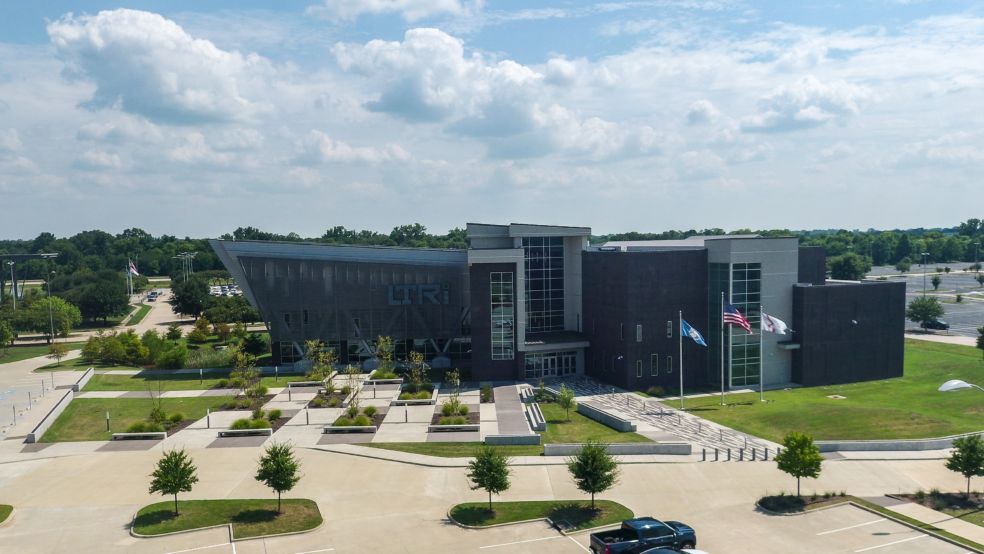
That vision became the National Cyber Research Park (NCRP), anchored by the Cyber Innovation Center (CIC) in Bossier City. Today, the NCRP has already established itself as a center for innovation, cybersecurity, workforce development, and national defense collaboration.
But the most exciting chapter may still be ahead.
 The NCRP was intentionally designed for long-term expansion from the beginning. The park encompasses a 3,000-acre research and development overlay district strategically located adjacent to Barksdale Air Force Base.
The development was created to support research activities, advanced technology development, defense initiatives, cybersecurity operations, and collaboration among government, academia, and industry partners.
“That scale remains one of the park’s greatest strengths,” said Kevin Nolten, CIC president. “The result is an environment where organizations can grow alongside one another while benefiting from shared infrastructure and strategic partnerships.”
What separates the NCRP from a traditional office park is the infrastructure supporting it.
The park’s facilities and systems were created with mission-critical work in mind. Features include resiliency, redundancy, cybersecurity, and physical security.
Whether supporting defense technology, artificial intelligence applications, cybersecurity exercises, corporate research and development, or academic laboratories, organizations operating within the NCRP gain access to an environment designed to support secure and reliable operations.
The NCRP’s appeal extends well beyond its infrastructure.
Located within the Shreveport-Bossier metropolitan area, the park offers businesses access to a solid regional population with significantly lower operating costs than the national average.
“Organizations considering locations such as Washington, D.C., Northern Virginia, Austin, or other technology corridors often face rising labor costs, expensive real estate, and intense competition for talent. Northwest Louisiana offers a different value proposition,” Nolten explained. “Lower facility costs, competitive tax incentives, affordable housing, and a lower overall cost of living allow businesses to stretch their investment dollars further while maintaining access to a growing and capable workforce.”
While the infrastructure is set up to support new opportunities, the area’s talent is the real secret to success.
One of the NCRP’s greatest competitive advantages is its higher education partnerships.
Over the years, the park has evolved into a place where employers and educators work together to align workforce development efforts with real-world industry needs. Students gain exposure to emerging technologies, employers gain access to future talent, and the region benefits from a stronger workforce pipeline.
No organization understands that connection better than Bossier Parish Community College (BPCC).
“Being part of the National Cyber Research Park strengthens BPCC’s mission and expands opportunities for our students,” said Dr. Rick Bateman, Chancellor of BPCC. “The NCRP connects education, industry and innovation in a way that accelerates workforce development for our region.”
That perspective is shared by the Louisiana Tech Research Institute (LTRI), another key NCRP partner.
According to LTRI Executive Director Warren Ward, the collaboration between industry and academia creates benefits that extend far beyond individual organizations.
 “Being anchored in the National Cyber Research Park provides the Louisiana Tech Research Institute with strong connections to both industry and academia,” Ward said. “The collective expertise across these organizations spans workforce development, upskilling and reskilling initiatives, and groundbreaking innovative problem-solving locally and nationally. The partnerships fostered within the NCRP serve as a powerful economic force multiplier for our region.”
Together, institutions such as BPCC, LTRI, and other university partners help provide the workforce foundation necessary for future growth.
The NCRP’s growing network continues to attract organizations whose missions align with cybersecurity and national defense priorities.
Recent additions, including the stationing of the Louisiana National Guard’s 178th Cyber Protection Team at the CIC, further reinforce the NCRP’s growing role in cybersecurity and national defense initiatives.
Each new organization strengthens the overall ecosystem, making the park more attractive to future tenants seeking access to expertise, talent, partnerships, and innovation networks.
“As we navigate an increasingly complex world where cyber warfare can take center stage, we look to continued investment in cybersecurity and advocate for additional cyber capabilities such as increased force structure to accommodate our amplified necessities,” said Maj. Gen. Thomas Friloux, adjutant general of Louisiana, said when the National Guard announced its stationing at the CIC. “I hope this development serves as a catalyst for receiving a larger cyber unit in the future.”
The future of the National Cyber Research Park is not defined by a single company, building, or project. Instead, it is defined by possibility.
“The vision that launched the National Cyber Research Park nearly two decades ago was ambitious, but it is delivering results on workforce development, defense innovation, and educational partnerships,” Nolten concluded. “Tomorrow, the NCRP’s greatest contribution will be housing the next generation of technology companies, researchers, and innovators.”
Discover more from Be Bossier
Subscribe to get the latest posts sent to your email.